What is a Chief Transformation Officer?
What is a Chief Transformation Officer?

A complete guide to determining if your organization needs a CTO & how to hire
Responsibilities of a Chief Transformation Officer
1. Strategic Vision Development
2. Change Management Leadership
3. Process Optimization
4. Digital Transformation Oversight
5. Financial Performance Management
6. Culture Development
The Ideal Qualifications of a Chief Transformation Officer
Professional Experience
Technical Knowledge
Leadership Capabilities
Industry-Specific Knowledge
How to Hire a CTO
1. Define the Scope & Objectives for the Transformation
2. Source Candidates Strategically
3. Conduct Interviews
4. Check References
6. Set Expectations & Onboard
Conclusion

If your company is planning significant operational changes, a Chief Transformation Officer can offer tremendous value. With their experience navigating and leading difficult transitions and reorganizations, a CTO at the helm provides both strategic vision and stability during even the toughest pivots. Even if the transformation targets only a subset of the organization, a Chief Transformation Officer ensures that the changes implemented are deliberate, effective, and commensurate with the goals of the entire organization.
But don’t take our word for it—the evidence of this C-suite position’s value is in the data. According to Bain’s research, large-scale transformations with a Chief Transformation Officer at the helm achieve 24% more of the target value than ones without.
In the following article, we will identify the primary responsibilities for this critical position, the ideal qualifications for a Chief Transformation Officer, and how to hire a talented CTO that fits the specific needs of your business.
Responsibilities of a Chief Transformation Officer
Chief Transformation Officers are hired to lead organizations through substantial organizational changes. Experienced in navigating critical changes in the vision, strategy, and structure of enterprises, they not only implement the shifts necessary to achieve the company’s new goals but also contribute to the development of the strategic vision of the organization. Here are the key responsibilities a Chief Transformation Officer is usually tasked with:
Have a role you'd like to discuss?
Looking to expand your team?
1. Strategic Vision Development
CTOs typically collaborate with other top executives to identify transformation needs and priorities. With a full seat at the C-suite table, this means they not only produce a tactical guide to implementing change but chart the course and help set the final goals. This includes creating comprehensive roadmaps for organizational change, aligning transformation initiatives with broader business objectives, and establishing clear metrics to measure transformation success.
For a great example of how a highly strategic CTO can generate extraordinary amounts of value for struggling or growing companies, check out the interview with Sergio Castanho (CEO of M4E Lithium) on the Beyond Consulting podcast here.
2. Change Management Leadership
Change management is a CTO’s bread-and-butter. While some CTO’s might be tasked with setting-up a dedicated “transformation team” or focus their efforts on a particular unit within the larger organization, a high-performing CTO will always engage multiple teams and work cross-functionally. According to research by McKinsey, a “team activation approach” to transformation, which allows for input by as many teams within the organization as possible, leads to a significant increase in employee buy-in and satisfaction with the results of the transformation.
In addition to communicating their vision for change, CTOs need to be prepared to manage resistance to change by actively engaging all stakeholders. Identifying the teams or individuals most affected by the proposed changes is also a key step towards ensuring operational continuity during the transition period.
3. Process Optimization
A true process improvement isn’t just an adjustment of the current workflow but rather a complete revolution of business operations. There are a number of models for achieving process improvements, but all involve identifying operational inefficiencies, leveraging new technologies to increase productivity where possible, streamlining workflows, eliminating redundancies, and standardizing best practices across departments.
What this means for a CTO is they must be capable of accurately assessing the current state of the company’s operations before implementing any change. A revolution is not a demolition. Rather than burning down good systems and hoping a Phoenix rises in the ashes, smart CTOs look at what is working first before determining what needs to be changed.
4. Digital Transformation Oversight
A Chief Transformation Officer leads digital adoption initiatives across the organization while evaluating and implementing appropriate technology solutions that align with strategic objectives. They establish governance frameworks that ensure technology investments deliver measurable business value and support sustainable growth.
The CTO ensures data-driven decision-making becomes standard practice throughout all business units and departments. They foster digital literacy throughout the workforce through training programs and mentorship opportunities, creating a culture where employees at all levels embrace technological change as a competitive advantage.
5. Financial Performance Management
How does a successful Chief Transformation Officer manage limited resources during periods of significant change? Establishing and tracking KPIs is, of course, a first step.
A skilled CTO strategically optimizes resource allocation throughout various transformation phases, ensuring that personnel, technology, and capital are deployed efficiently to maximize impact. They diligently track return on investment for all transformation initiatives, implementing robust measurement frameworks that quantify both tangible and intangible benefits of change efforts.
Part of the work of a CTO is discovery. You know your business could be performing better, but it’s the job of the CTO to figure out exactly how to make this happen. Many of these cost-saving initiatives emerge through transformation processes—CTOs often find efficiencies that were previously overlooked in legacy systems and workflows.
6. Culture Development
At ECA, cultural transformations are one of the most desirable changes we hear from the business leaders we partner with. For organizations to change, the people who make up that enterprise must be willing to embrace it. This isn’t about coaxing a few unwilling employees but rather requires a general orientation towards innovation.
This also isn’t limited to senior leadership. From rank-and-file on up, having a “common cultural aspiration” is a key part of ensuring the vitality of the organization as a whole. While there is no one-size-fits-all model for company culture, it’s important to create a reward system that reinforces desired behaviors. This can be as simple as providing recognition for a team win to each member of the team.
The Ideal Qualifications of a Chief Transformation Officer
Professional Experience
According to a recent study of Chief Transformation Officers by Deloitte, most CTOs have significant experience in both operations and strategy. In addition, due to their focus on technological and financial improvements, they often have a background in implementing digital transformation, upgrading tech stacks, and tracking financial performance. Finally, as change agents, they should be highly skilled in change management and bringing diverse stakeholders to a consensus.
These experiences are often only acquired after significant exposure to management consulting, private equity or directly operating a business (for example, as a founder or key operator). For this reason, at ECA, we typically recommend recruiting a person with at least 15 years of progressive experience in at least one of these areas.
Technical Knowledge
While it depends on the industry, CTOs will typically have exposure to:
- Digital literacy and understanding of emerging technologies
- Data analytics and metrics-based performance evaluation
- Process improvement methodologies (Six Sigma, Lean, Agile)
- Enterprise resource planning and management systems
Leadership Capabilities
CTOs are politicians as much as they are technical and financial gurus. To implement their strategies, they need the tact, gravitas and emotional intelligence to motivate and get buy-in from the team. Here is a short list of primary characteristics to screen for when hiring a CTO:
- Exceptional communication and storytelling abilities
- Strategic thinking with tactical execution skills
- High emotional intelligence and stakeholder management expertise
- Resilience and comfort with ambiguity
- Ability to influence without direct authority
Industry-Specific Knowledge
Every industry will be slightly different—a CTO for an Oil & Gas company rightfully might be a poor fit for a hospital. Broadly, a CTO should have:
- Understanding of relevant regulatory environments
- Awareness of industry-specific challenges and opportunities
- Knowledge of competitive landscape and market forces
- Familiarity with industry-standard technologies and processes
How to Hire a CTO
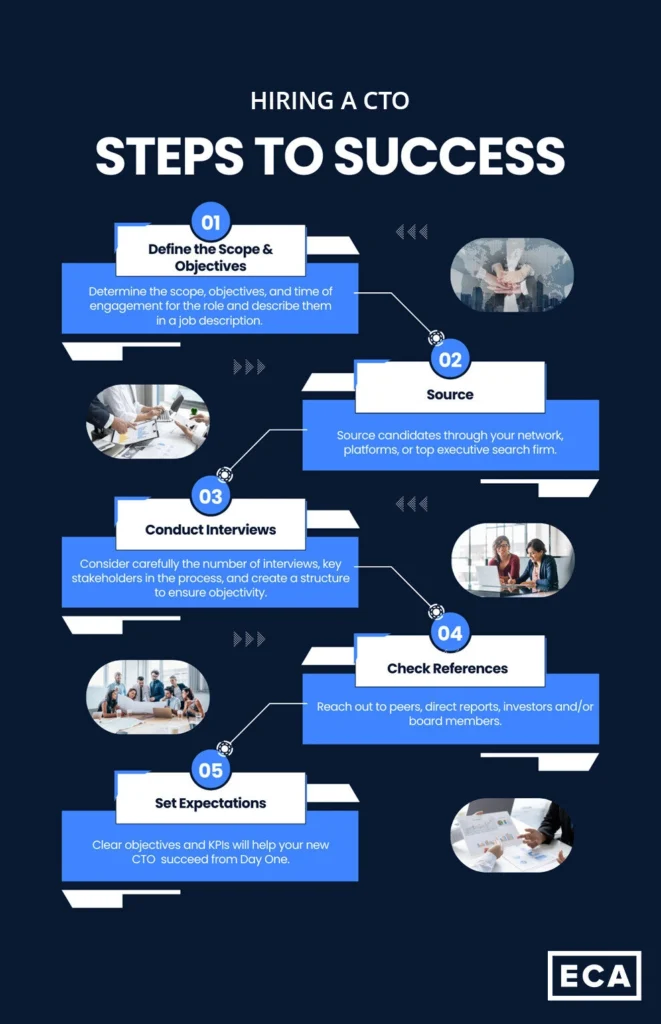
As the Nobel Laureate Alvin Roth argued in his book, Who Gets What and Why, identifying and attracting top talent is all about matching. To find the right match for your organization, consider key focus areas for the position and what makes your organization unique. The right Chief Transformation Officer for your organization must align with your specific transformation needs, company culture, and long-term vision.
Here’s how to find that perfect match:
1. Define the Scope & Objectives for the Transformation
- Identify the specific type of transformation your organization requires (digital, operational, cultural)
- Determine the scope and timeline of your transformation initiatives
- Clarify whether this is a permanent role or a temporary assignment
- Establish key performance indicators for measuring transformation success
2. Source Candidates Strategically
- Partner with a top executive search firm specializing in transformation leadership
- Leverage industry networks and professional associations
- Look for candidates with experience in your specific transformation needs
- Consider internal candidates who understand your organization’s culture
- Explore candidates from adjacent industries who bring fresh perspectives
3. Conduct Interviews
- Conduct structured interviews focusing on past transformation successes
- Include scenario-based questions related to your specific challenges
- Involve cross-functional stakeholders in the interview process
- Consider having finalists present their transformation vision for your organization
4. Check References
- Conduct a thorough reference check. In addition to speaking to at least one person the individual has reported to, we also recommend speaking to a person who reported to the candidate and someone who worked alongside them. The goal here is to get a comprehensive, 360-degree view of the candidate as an employee.
- Conduct background checks
6. Set Expectations & Onboard
- Facilitate a comprehensive onboarding process
- Set expectations with a clear timeline
- Establish early wins to build momentum
- Create communication channels across the organization
- Provide visible executive sponsorship
- Allow time for relationship building before major change initiatives
Conclusion
A skilled Chief Transformation Officer can be the difference between transformation success and failure. By understanding the comprehensive responsibilities of this role, identifying the necessary qualifications, and implementing a thoughtful hiring process, organizations can find the right leader to guide them through periods of significant change.
Remember that successful transformation isn’t just about implementing new systems or processes—it’s about fundamentally shifting how an organization operates, thinks, and delivers value. The right CTO brings not only technical expertise but also the leadership capabilities to inspire an entire organization toward a new future.
By investing time in finding the perfect transformation leader, your organization positions itself for not just successful change implementation but sustainable growth and competitive advantage in an increasingly dynamic business environment.
Interested in hiring a Chief Transformation Officer for your organization? Connect with us here to learn about our fractional talent solutions.
Evan Metzger is a Project Manager at ECA Partners. He can be reached at [email protected].
Expertise
Insights
Commentary & Thought Leadership
Evidence Based RecruitingCase StudiesBlogBeyond Consulting PodcastNot So Private Equity Podcast


